Till, stock and wages. One app.
Sell, count what is on the shelf, pay your people and know what the month cost. Works with no internet. Free for one machine.
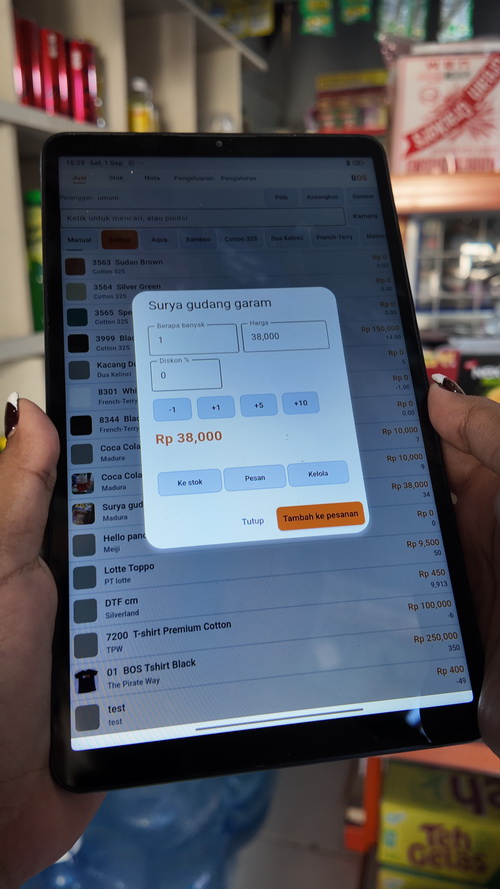
Sell, count what is on the shelf, pay your people and know what the month cost. Works with no internet. Free for one machine.
Not the app. The notebook.
A colour that has not sold since March is money lying on a shelf, and a notebook will not tell you. This will, the first time you look.
One person carries the prices, the customers and what everyone is owed. When they go it goes with them. Here it stays in the shop.
Yours and theirs, about the same advance. One is wrong and neither of you can prove which. Written down when the money changes hands, there is only one.
A month of paper on a spike, and nobody adds it up until the accountant asks. Photograph each one as it arrives and the month is already added up.
If the shop only works when you are standing in it, you do not have a business, you have a job. Everything is on the phone in your pocket.
A shop with three people has three prices for the same metre. The customer notices before you do.
Ring it up, take the money, print the receipt. The shelf goes down as you sell.
Table 4 orders drinks, then food, then more drinks. One bill, one payment, and a slip for the kitchen.
Room 2 orders all week and pays at checkout. Put a QR on the table and guests order from their own phone.
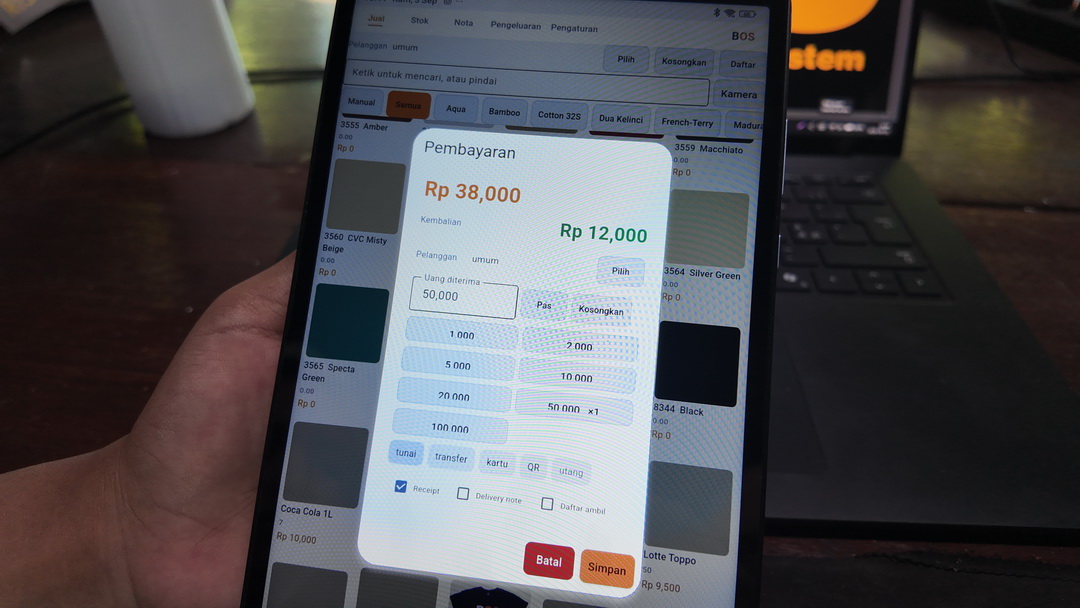
Scan or tap, take the money, hand over a bill. Cash, transfer, part payment, change. The bill goes on paper or on WhatsApp.
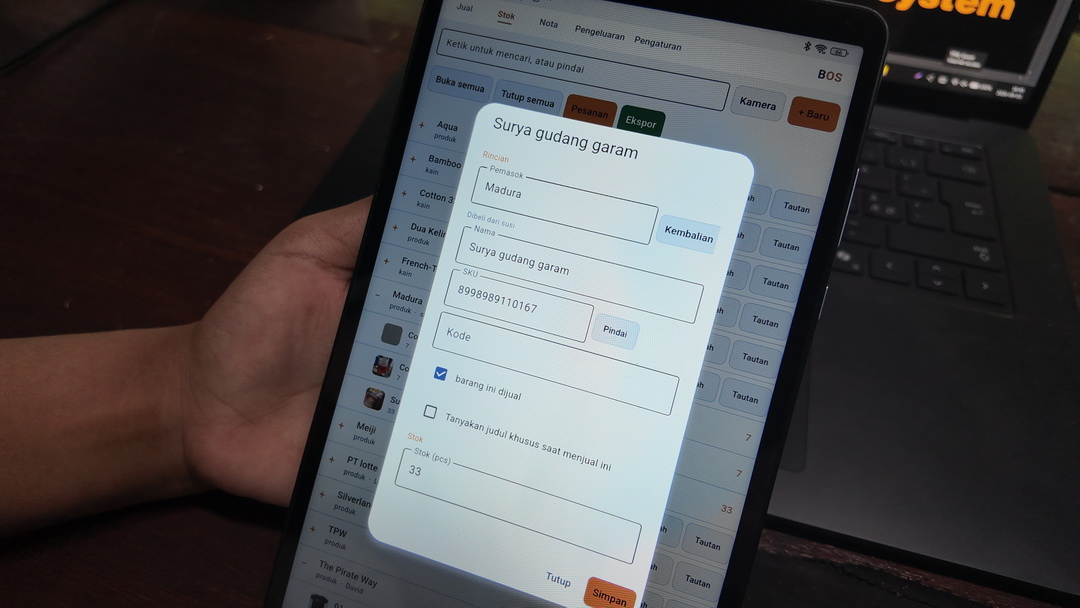
Products, colours, sizes, photographs and price bands. Count what is there, move it, order more from a supplier.
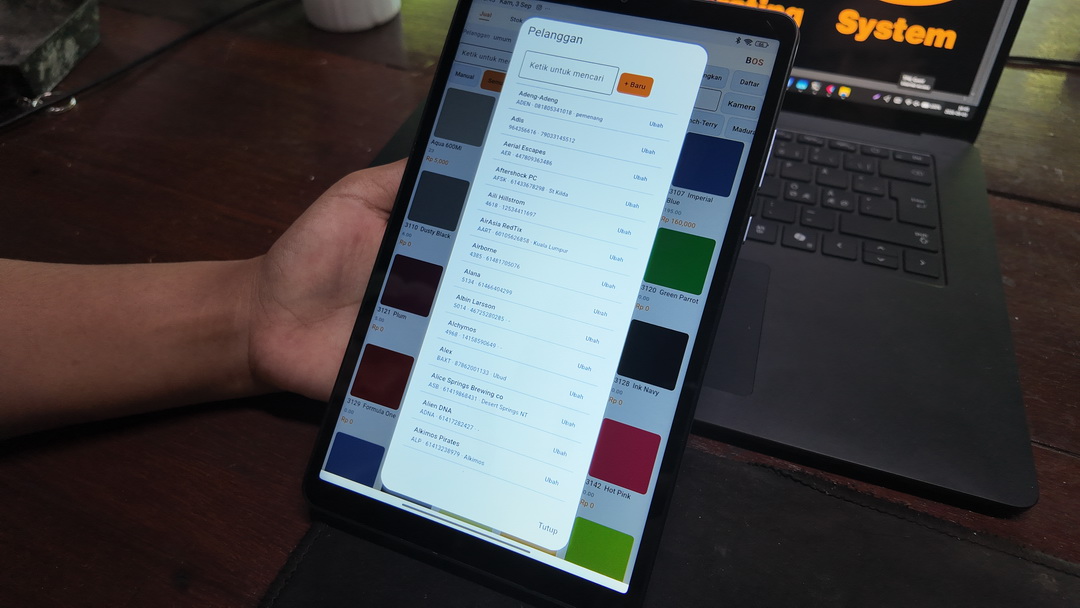
Who bought what, what they still owe, and their number. A bill can go straight to them.
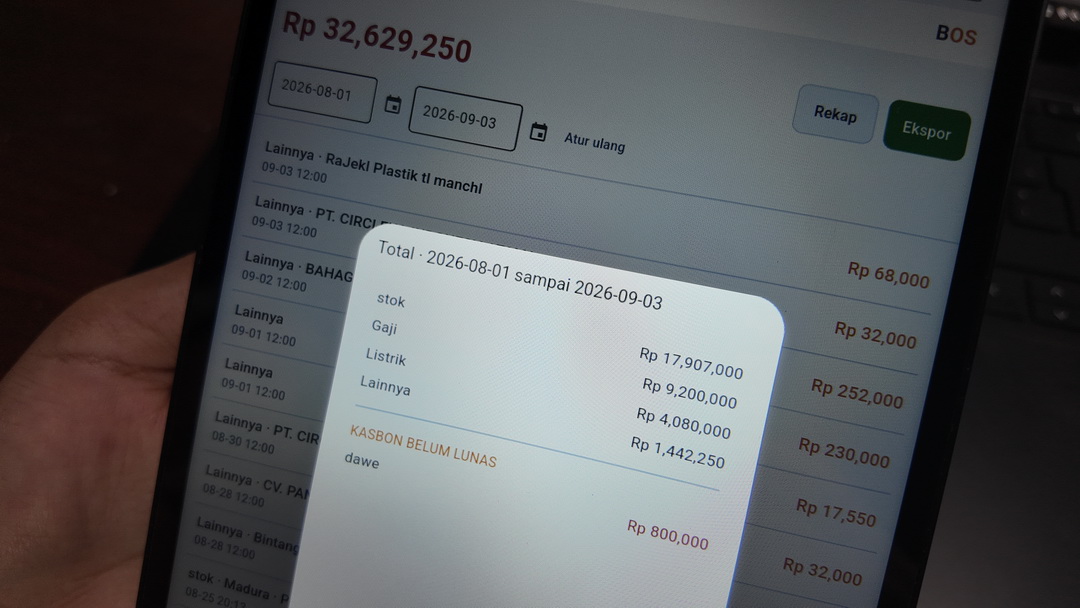
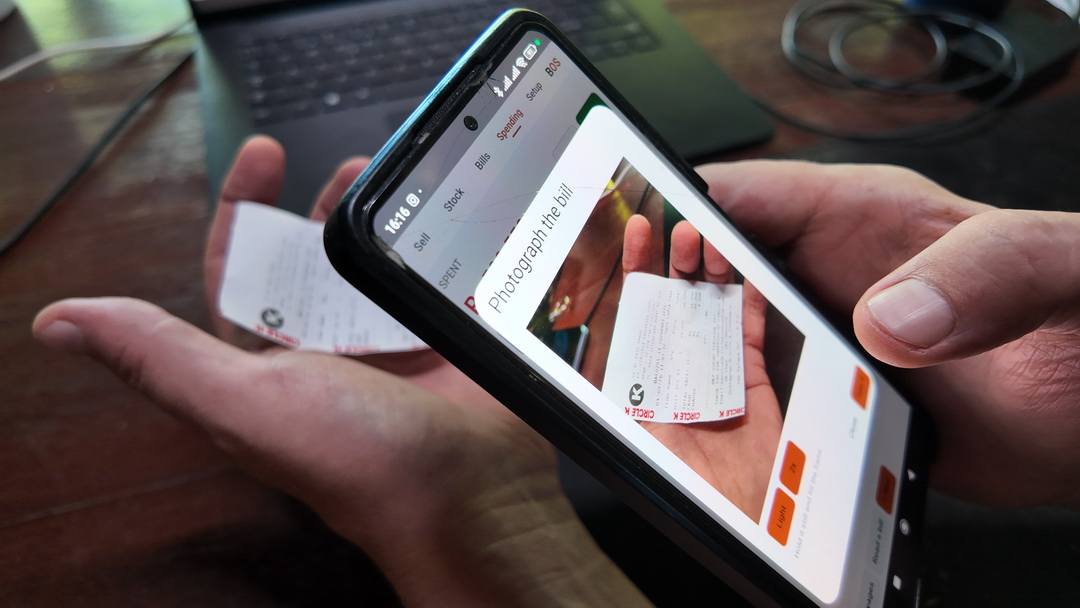
Rent, electricity, supplies. Photograph a supplier's bill and it reads the supplier, the date, the total and the lines off it.
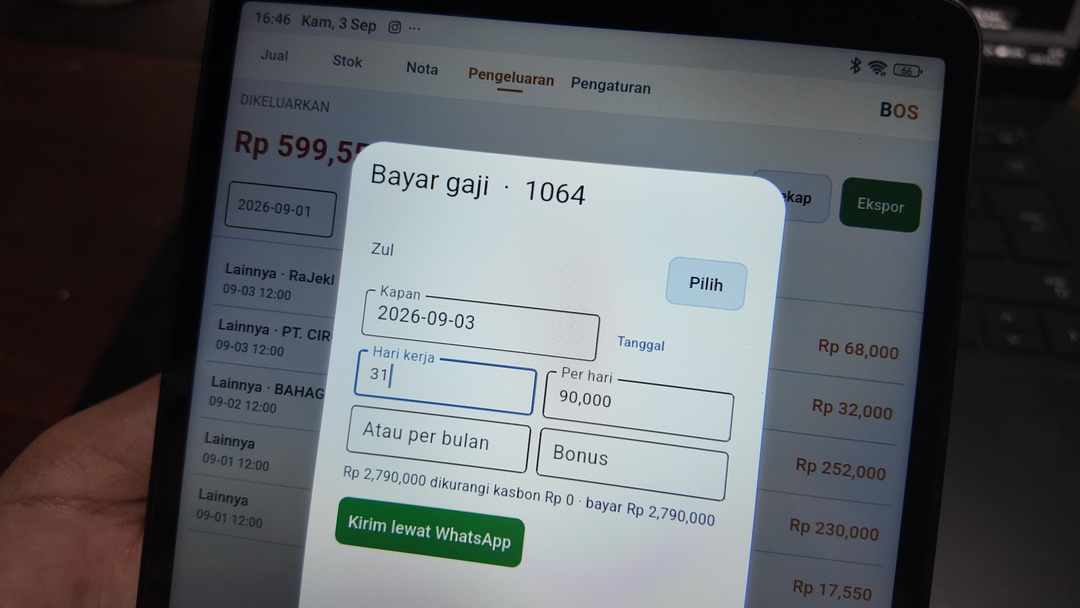
Days or months, advances taken off, a bonus on top. The payslip goes out on WhatsApp in whichever language they read.
Takings by shelf, who sold most, what went out and on what. Two exports an accountant can open.
Printed or handwritten. A supplier's receipt on the counter, photographed on the phone, and the name, the date, the total and every line come off it and into the month's spending. The handwritten ones are the point: those are the bills that never get typed in, and they are most of what a shop actually spends.
People borrow before payday. Every shop in Bali runs on it, and every shop keeps it in a notebook that disagrees with the person's own. Write the advance down when you hand it over, and payday works it out - what was earned, what was taken, what is left. The payslip says all three, in their language, on WhatsApp.
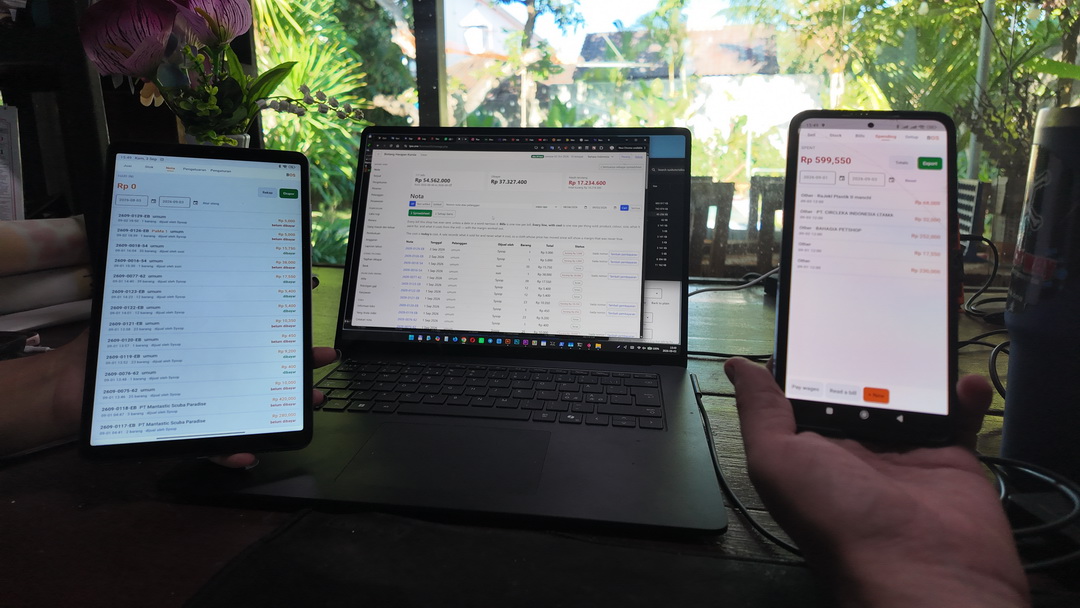
What a shop does alone is free. What needs our machines is not.
Everything a shop does on its own: selling, the shelf, customers, spending, wages, advances, bonuses, both exports, every screen in your language, on as many machines as you like.
Everything that needs our machines: every device sharing one set of books, your shelf on the web for customers to look at, and reading a supplier's bill from a photograph.
See BOS Online →Because a shop with one phone costs us nothing to serve. You are not a trial that runs out, and there is no card to give. Sell, count your stock, pay your people and take your figures away whenever you like - that is the whole app, not a taste of it. We charge the day you need MORE than one device, and not before.
A person opens the page, allows their location, and sees the shops around them and what each one has today. Not a photograph from last year - the shelf itself, because the till put it there when the stock came in.
Customers find your shop →